Best Cyber Security Course in Pune: Complete Career Guide for Freshers in 2026
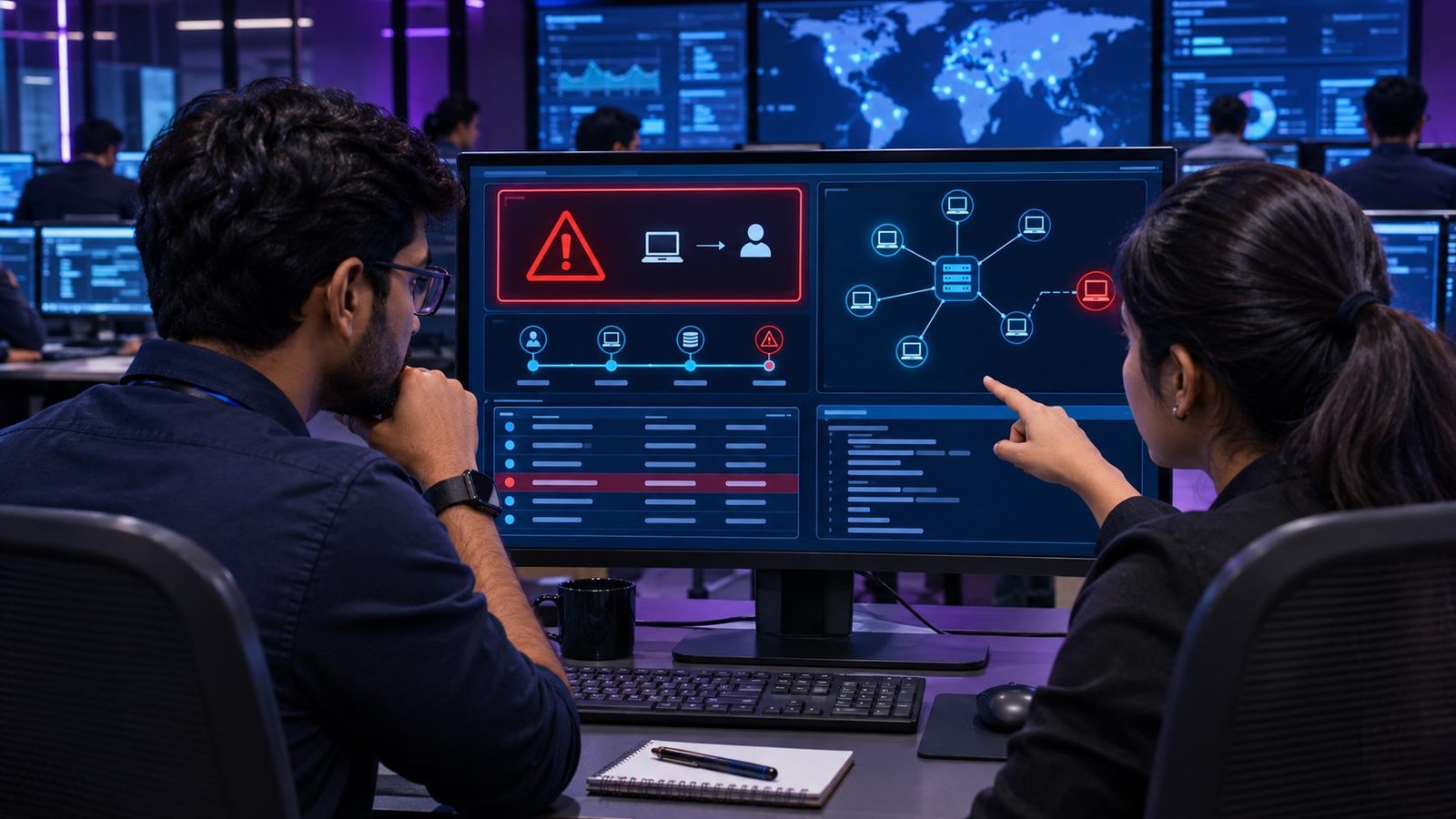
Cybersecurity has become an essential part of modern business operations. As organizations adopt cloud computing, digital payments, artificial intelligence and connected technologies, protecting sensitive information and IT systems has become increasingly important.
For students and recent graduates interested in technology, cybersecurity offers several career pathways, including security monitoring, threat analysis, incident response and security operations.
If you are searching for a Cyber Security Course in Pune, choosing the right training program is an important first step toward building a career in this field.
This guide explains what cybersecurity professionals do, which technical skills beginners should learn, how to evaluate training institutes, and why practical experience and internships matter.
1. Why Choose Cybersecurity as a Career in 2026?
Cybersecurity professionals help organizations identify security threats, investigate suspicious activities, protect digital infrastructure and respond to potential incidents.
As businesses increasingly depend on cloud services, online applications and digital communication, security teams must understand both traditional security concepts and emerging technologies.
The Data Security Council of India (DSCI) and SANS Institute’s Indian Cyber Security Skilling Landscape Report 2025–26 highlights the importance of practical cybersecurity capabilities.
According to the report:
- 73% of surveyed enterprises reported limited availability of skilled cybersecurity candidates.
- 63% of enterprises reported insufficient hands-on practical skills among job candidates.
- 84% of organizations reported taking one to six months to fill cybersecurity roles.
These findings show why learners should focus on building demonstrable technical capabilities rather than relying only on theoretical knowledge.
However, demand for cybersecurity skills does not guarantee employment. Entry-level candidates must still demonstrate their abilities and compete for available opportunities.
2. What Is a Cyber Security Course?
A cybersecurity course introduces students to the technologies, processes and security practices used to protect computer systems, applications, networks and digital information.
A well-structured beginner-level course should cover networking fundamentals, operating system security, security monitoring, threat detection and incident response.
Students can progressively develop skills in areas such as:
- Computer networking and TCP/IP
- Linux and Windows operating systems
- Network security and firewalls
- Security logs and event analysis
- Security Information and Event Management (SIEM)
- Security Operations Center (SOC) workflows
- Threat intelligence and incident investigation
- Cloud and identity security fundamentals
- AI-assisted cybersecurity workflows
The goal should be to help students understand security problems and investigate them responsibly through authorized practical exercises.
3. Who Can Join a Cyber Security Course in Pune?
Cybersecurity is a possible career option for learners from several educational backgrounds.
A beginner-oriented cybersecurity training program may be suitable for:
- BCA and MCA students
- B.Sc. Computer Science and Information Technology graduates
- BE and B.Tech students
- Recent graduates interested in IT security
- IT support professionals looking to move into cybersecurity
- Beginners with an interest in networking, systems and security operations
Do you need coding knowledge to learn cybersecurity?
Not necessarily.
Many entry-level security operations activities depend more on networking fundamentals, operating systems, log analysis and structured investigation than advanced programming.
However, learning basic scripting with Python or Bash can be useful as students progress.
4. Essential Skills to Learn in a Cyber Security Course
When comparing cybersecurity courses in Pune, pay attention to the actual syllabus rather than simply the number of tools listed.
Networking and Security Fundamentals
Students should understand IP addressing, DNS, HTTP/HTTPS, TCP/IP, common ports, firewalls and basic network communication.
Networking knowledge helps analysts recognize normal traffic patterns and identify suspicious activity.
Linux and Windows Security
Operating systems are important sources of security information.
Learners should practise working with file permissions, user accounts, processes, authentication records and security logs.
Security Monitoring and SIEM
Security Information and Event Management tools collect, organize and analyze security-related events.
Training should introduce students to log searches, dashboards, event correlation and alert investigation.
SOC Operations and Incident Response
A Security Operations Center monitors security events and coordinates responses to potential incidents.
Students should learn how to validate alerts, prioritize incidents, document findings and follow escalation procedures.
Cloud and Identity Security
Cloud platforms and identity systems introduce additional security considerations.
Foundational knowledge of access controls, multi-factor authentication, cloud logs and least-privilege principles is increasingly relevant.
AI-Assisted Security Operations
Artificial intelligence can support certain security workflows, including summarizing alerts, organizing investigations and explaining complex log information.
However, cybersecurity analysts must independently verify AI-generated recommendations and protect sensitive information.
5. What Is a SOC Analyst and Why Is This Role Important?
A Security Operations Center Analyst, commonly called a SOC Analyst, helps monitor and investigate cybersecurity events.
Typical responsibilities include:
- Reviewing security monitoring alerts.
- Identifying potentially suspicious activity.
- Analyzing relevant logs and event information.
- Distinguishing false positives from credible threats.
- Documenting investigation findings.
- Escalating incidents according to established procedures.
For freshers exploring cybersecurity careers, understanding SOC operations provides a useful introduction to defensive security responsibilities.
A SOC Analyst Course in Pune should ideally include practical investigation exercises involving logs, security alerts, SIEM queries and incident documentation.
6. Why Practical Training Matters in Cybersecurity
Cybersecurity cannot be learned effectively through theory alone.
Students need opportunities to apply their knowledge through supervised practical activities.
For example, a learner studying phishing should understand how to examine suspicious email indicators, evaluate supporting evidence and document findings.
Similarly, a student learning SIEM should practise querying sample logs and investigating simulated security events.
Useful practical learning activities include:
- Network traffic analysis using Wireshark
- Windows and Linux log investigation
- SIEM monitoring dashboards
- Simulated phishing investigations
- Security alert triage
- Incident timeline preparation
- Defensive investigation reports
These exercises can help students build a technical portfolio that demonstrates how they approach security problems.
All security testing and investigations should be conducted in authorized environments.
7. Why Choose a Cyber Security Course with Internship?
One of the factors students should consider while selecting a cybersecurity training program is whether it includes structured practical experience.
A Cyber Security Course with Internship can provide an opportunity to apply classroom concepts in a supervised professional setting.
Technical training develops foundational understanding, while internship activities may introduce learners to documentation practices, reporting processes, collaboration and security workflows.
Before selecting any program, students should clarify:
- Whether the internship takes place in an actual company
- The internship duration and eligibility requirements
- Whether activities are supervised
- The assigned work mode and responsibilities
- What documentation is provided after completion
An internship may strengthen a learner’s experience, but it should not be confused with a job guarantee.
8. Cyber Security Course in Pune at Educora Technologies
For students and graduates evaluating cybersecurity training options, Educora Technologies offers a structured program called Cybersecurity & AI-Powered SOC.
The program combines cybersecurity fundamentals, practical security operations training and an internship pathway.
Program Structure
Total Duration: 6 Months
First 3 Months — Technical Training
Students develop foundational and applied skills in cybersecurity, networking, Linux, Windows security, SIEM, SOC alert triage, incident investigation and responsible AI-assisted security workflows.
The curriculum includes progressive practical exercises, project reviews and a defensive investigation capstone.
Next 3 Months — Company Internship
After the training phase, learners participate in an actual three-month company internship.
The internship focuses on applying security operations concepts through supervised activities, monitoring tasks, investigation documentation and reporting.
What Will You Learn?
Educora’s published curriculum covers:
- Cybersecurity fundamentals and ethical security practices
- Networking for security analysts
- Linux, Windows and endpoint basics
- Security monitoring and log foundations
- SIEM concepts and querying
- MITRE ATT&CK and detection fundamentals
- SOC alert investigation and escalation
- Incident response procedures
- Threat intelligence and phishing analysis
- Cloud and identity security
- AI-assisted SOC workflows
- Defensive capstone projects
The program is designed to help learners build relevant knowledge, practical investigation skills and a documented portfolio.
Explore Educora’s Cybersecurity & AI-Powered SOC Course
9. Career Opportunities After Cyber Security Training
After completing relevant training and developing practical skills, freshers may explore entry-level roles such as:
| Career Role | Typical Responsibilities |
|---|---|
| SOC Analyst Intern | Support alert monitoring and investigation |
| SOC Analyst Trainee | Review logs, validate alerts and document findings |
| Junior Security Operations Analyst | Assist with daily security monitoring activities |
| Cybersecurity Analyst Intern | Support defensive security assessments and investigations |
| Security Monitoring Analyst Trainee | Help identify unusual system and network activity |
| IT Security Support Trainee | Support access management and security procedures |
Actual role eligibility depends on a candidate’s knowledge, practical abilities, qualifications and employer requirements.
Completing a course does not automatically qualify a learner for every listed role.
10. How to Choose the Best Cyber Security Training Institute in Pune
Students comparing cybersecurity institutes should evaluate the training experience rather than relying solely on advertisements.
Check the Curriculum
Review whether the syllabus includes networking, operating systems, SIEM, monitoring, incident response and foundational cloud security.
Look for Practical Learning
Confirm whether students will perform guided labs, investigation exercises and technical assignments.
Understand the Internship Structure
If a course advertises an internship, ask how it is organized and what practical responsibilities are involved.
Evaluate Career Preparation
Portfolio development, technical assessments and interview preparation can help learners explain their skills to potential employers.
Compare Training Modes
Students should confirm whether the program is available online, in person or through a hybrid format.
The appropriate mode depends on learning preferences, schedules and access to equipment.
Ask About Fees and Batch Timings
Before enrolling, request information about course fees, scheduled classes, internship arrangements and any additional requirements.
Tip: The best cybersecurity course for one student may not be the best option for another. Choose a program that matches your current skill level, learning goals and circumstances.
11. Can Freshers Build a Career in Cybersecurity?
Yes, freshers can begin preparing for entry-level cybersecurity roles without previous professional cybersecurity experience.
A practical learning roadmap is:
Step 1: Understand computer networking and security fundamentals.
Step 2: Learn Linux and Windows basics.
Step 3: Practise reading system and security logs.
Step 4: Explore SIEM and SOC monitoring workflows.
Step 5: Complete authorized defensive security exercises.
Step 6: Build a portfolio with investigation notes and technical reports.
Step 7: Apply for suitable internships, trainee positions and entry-level opportunities.
Consistent practice and clear technical communication are essential throughout this process.
12. Frequently Asked Questions
Which Cyber Security Course in Pune is suitable for freshers?
Freshers should look for a beginner-friendly course that introduces networking, operating systems, security monitoring and practical defensive investigations. Educora’s Cybersecurity & AI-Powered SOC program is one option to evaluate.
Is cybersecurity difficult for beginners?
Cybersecurity involves technical concepts, but beginners can develop skills progressively by starting with networking and operating system fundamentals before moving into security monitoring and investigation.
Can I join a cybersecurity course after BCA or B.Sc.?
Yes. BCA, B.Sc. Computer Science, B.Sc. IT and related graduates can consider cybersecurity training, subject to a program’s prerequisites.
What is the duration of Educora’s cybersecurity program?
Educora’s Cybersecurity & AI-Powered SOC career program has a total duration of six months, consisting of three months of technical training followed by three months of company internship.
Does Educora provide internship opportunities?
Educora’s published career program includes an actual three-month company internship following technical training. Students should enquire about specific arrangements, responsibilities and eligibility.
Does learning cybersecurity guarantee a job?
No. Employment depends on technical proficiency, interview performance, available openings and employer selection criteria.
Can I study cybersecurity online?
Yes. Cybersecurity fundamentals, defensive labs, security monitoring and related skills can be studied through structured online training with suitable equipment and guidance.
How can I check upcoming batches?
Students can review Educora’s published schedule for upcoming batch dates and available delivery modes.
View Educora’s Latest Batch Schedule
Conclusion: Start Building Your Cybersecurity Career
Choosing a Cyber Security Course in Pune involves more than comparing course fees or training duration.
A useful cybersecurity program should offer structured technical learning, practical exercises, relevant security operations skills and transparent information about internship opportunities.
For beginners, developing networking knowledge, learning security monitoring techniques and gaining experience with defensive investigation workflows can provide a foundation for future career development.
Educora Technologies’ Cybersecurity & AI-Powered SOC Career Program brings together three months of technical training and three months of company internship, with a focus on practical security operations and responsible AI-assisted workflows.
If you are planning to begin your cybersecurity learning journey, explore the complete course curriculum and upcoming batch schedule before making your decision.
Explore the Cybersecurity Career Program
Educora Technologies — Learn. Build. Transform.