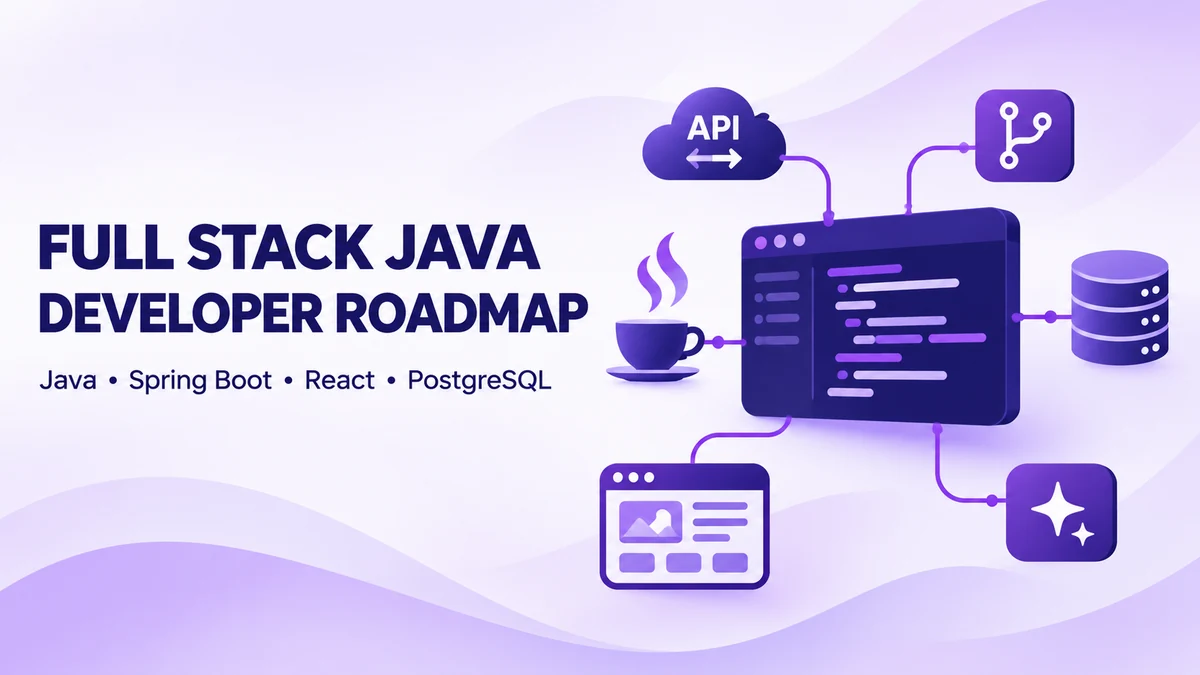
Full Stack Java Developer Course in Pune: Complete Career Guide
Software applications have become an essential part of businesses across industries. From online banking and e-commerce platforms to enterprise management systems, companies rely on skilled developers to build, maintain, and improve their digital applications.
Java continues to be an important programming language in enterprise software development. When combined with frontend technologies, databases, backend frameworks, and modern development tools, it provides a strong foundation for building complete web applications.
If you are a student, fresher, or graduate planning to enter the software development industry, learning Full Stack Java Development can be a valuable career path.
This guide explains what Full Stack Java Development involves, which technologies you should learn, how to select a Java training institute in Pune, and how structured training can help you prepare for entry-level developer opportunities.
What Is Full Stack Java Development?
Full Stack Java Development involves developing both the frontend and backend components of web applications, along with integrating databases and application services.
A Full Stack Java Developer works with technologies across different layers of an application.
Frontend Development
Frontend development focuses on the parts of an application that users interact with. Common technologies include:
- HTML5 for page structure
- CSS3 for styling and responsive design
- JavaScript for interactive functionality
- React or Angular for frontend applications
Backend Development
Backend development manages application logic, server-side processing, authentication, and communication between systems.
Java developers commonly work with:
- Core Java
- Object-Oriented Programming (OOP)
- Java Collections and Exception Handling
- JDBC
- Spring Framework
- Spring Boot
- REST APIs
- Spring Data JPA and Hibernate
Database Development
Databases allow applications to store, retrieve, and manage information.
Common database technologies include MySQL and PostgreSQL.
By understanding these layers, developers can participate in building complete applications rather than working on only one component.
Why Learn Full Stack Java Development?
Java has a well-established presence in enterprise application development. Its ecosystem includes mature frameworks, libraries, development tools, and a large developer community.
Learning Full Stack Java Development offers several potential advantages.
1. Opportunities Across Different Industries
Java is used in software applications across banking, financial services, e-commerce, enterprise technology, and other business sectors.
Developers with Java skills may find opportunities with software development companies, IT service providers, technology teams, and product-based organizations.
2. Frontend and Backend Knowledge
A full stack developer understands how user interfaces, backend services, and databases work together.
This broader understanding can be useful for application development, debugging, integration, and collaboration with different software teams.
3. A Foundation for Modern Application Development
Java can be used with technologies such as Spring Boot, REST APIs, relational databases, cloud platforms, and container-based deployment.
These skills help developers understand how contemporary business applications are designed and delivered.
4. Career Growth Through Experience
Beginning with an entry-level developer role can lead to more specialized opportunities in backend engineering, full stack development, application architecture, and technical leadership.
Career progression depends on technical skills, practical experience, problem-solving ability, and ongoing learning.
Full Stack Java Developer Course: What Should You Learn?
A well-structured full stack developer course should cover programming fundamentals, frontend development, backend technologies, databases, development tools, and application integration.
Here is a suggested learning roadmap.
Step 1: Learn Core Java Programming
Core Java is the foundation of Java-based application development.
Important topics include:
- Java syntax, variables, and data types
- Operators and control statements
- Methods and arrays
- Classes and objects
- Inheritance, abstraction, and polymorphism
- Encapsulation and interfaces
- Exception handling
- Collections Framework
- Generics and lambda expressions
- Java Stream API
- Multithreading fundamentals
Developing a strong understanding of these concepts is essential before moving into advanced backend development.
Step 2: Understand Frontend Technologies
A Full Stack Java Developer should understand how to create interactive and responsive web interfaces.
Begin with HTML, CSS, and JavaScript.
Then progress to a modern frontend framework such as React or Angular, based on your selected learning path.
Important concepts include form handling, component-based development, API integration, routing, and state management.
Step 3: Learn Databases and SQL
Database skills are essential for building applications that manage information.
Students should understand:
- Relational database concepts
- Tables and relationships
- SQL queries
- Joins and subqueries
- Primary and foreign keys
- Database normalization
- Transactions
- Database connectivity using Java
MySQL or PostgreSQL can provide a practical environment for learning these concepts.
Step 4: Learn Spring Boot and REST API Development
Spring Boot is widely used to develop Java-based backend services.
Important topics include:
- Spring Framework fundamentals
- Dependency injection
- Spring Boot application structure
- RESTful API development
- Database integration using JPA and Hibernate
- Input validation
- Exception handling
- Authentication and authorization fundamentals
- Application configuration
- Unit and integration testing
These skills help learners understand how frontend applications communicate with backend systems.
Step 5: Understand Development Tools and Deployment
Modern software development also requires familiarity with tools and team workflows.
Useful technologies include:
- Git and GitHub
- Maven or Gradle
- Postman
- IDEs such as IntelliJ IDEA or Eclipse
- Basic Linux commands
- Docker fundamentals
- CI/CD concepts
- Cloud deployment fundamentals
Developers do not need to master every tool immediately, but understanding their purposes makes the transition into development teams easier.
Java Tutorial for Beginners: Where Should You Start?
If you are completely new to programming, begin with small Java exercises rather than immediately attempting a complete full stack application.
Start by understanding how Java programs are written, compiled, and executed.
Then practise basic programming concepts such as conditions, loops, arrays, methods, and object-oriented programming.
For example, a beginner can start with a simple Java program that displays a message:
public class HelloJava {
    public static void main(String[] args) {
        System.out.println("Welcome to Java Development");
    }
}
Once you understand basic Java syntax, progress to programs involving classes, objects, collections, and exception handling.
The next stage is learning how Java communicates with databases and how backend services interact with frontend applications.
A step-by-step Java training course can provide a structured progression for learners who prefer guided instruction.
Who Can Join a Full Stack Java Developer Course?
Full Stack Java Development can be suitable for learners from different educational backgrounds.
Potential participants include:
- BE and BTech students or graduates
- BCA and MCA students or graduates
- BSc Computer Science and IT students
- Recent graduates interested in software development
- Freshers preparing for entry-level IT roles
- Working professionals interested in moving toward development roles
The most important starting requirements are willingness to learn programming, basic computer knowledge, logical thinking, and consistent practice.
Prior programming knowledge can be helpful but is not always mandatory for a beginner-oriented training program.
Full Stack Developer Course in Pune: Why Consider Structured Training?
Pune has an established IT and education ecosystem, with software companies, technology service providers, and educational institutions.
Students searching for a full stack developer course in Pune often want a learning experience that connects technical concepts with workplace expectations.
Structured training can help learners follow a planned curriculum rather than studying unrelated topics without a clear sequence.
A useful training program should provide:
- A clearly defined learning roadmap
- Coverage of relevant programming technologies
- Practical coding exercises
- Guidance on development tools and workflows
- Opportunities to understand application integration
- Technical assessments and feedback
- Preparation for common developer interview topics
Before enrolling, students should review the syllabus and understand the training approach, eligibility requirements, and expected learning outcomes.
How to Choose the Best Training Institute for Java in Pune
Searching for the best training institute for Java is a common starting point for students.
However, the right institute depends on your background, learning goals, preferred mode of training, and career expectations.
Consider the following factors before selecting an institute.
Curriculum Quality
Check whether the curriculum covers Core Java, advanced Java concepts, Spring Boot, databases, frontend technologies, and development tools.
Practical Learning
Ask how programming exercises, coding assessments, debugging, and application development are incorporated into training.
Trainer Expertise
Look for instructors who can explain technical concepts clearly and relate them to software development practices.
Internship Structure
If the program includes an internship, understand its duration, nature of assignments, evaluation approach, and completion requirements.
Career Preparation
Review what interview preparation, resume guidance, technical assessments, and career support are available.
Transparency
Confirm program fees, training schedule, certification or completion documents, and applicable terms before enrolling.
Choosing a Java training institute in Pune should involve comparing actual course offerings rather than relying on promotional claims alone.
AI-Powered Full Stack Java Developer Career Program at Educora Technologies
Educora Technologies offers a career-focused approach to technology learning, including its AI-Powered Full Stack Java Developer program.
The program follows a six-month career learning structure:
3 Months of Training + 3 Months of Internship
The training stage is intended to build technical foundations, while the internship stage provides an opportunity to strengthen practical understanding in a structured environment.
Students considering the program should review the current curriculum, internship structure, batch schedule, eligibility, and completion requirements directly with Educora Technologies.
The program is relevant for learners who want to develop Java programming skills and explore full stack software development as a career.
Explore the AI-Powered Full Stack Java Developer Career Program at Educora Technologies.
Java Certification Course vs Full Stack Developer Course: What Is the Difference?
A Java certification course and a Full Stack Java Developer course may have different learning objectives.
A Java-focused course generally concentrates on Java language concepts, such as object-oriented programming, collections, exception handling, and related development fundamentals.
A Full Stack Java Developer course typically covers a wider technology stack, including frontend frameworks, backend development, databases, API integration, and development tools.
Certification can demonstrate completion of training or achievement of a specific assessment, depending on the issuing organization.
However, a training completion certificate should not be confused with an industry or vendor certification.
For students planning a development career, practical coding ability, a solid understanding of programming concepts, and interview preparation are important alongside any certification.
Career Opportunities After Learning Full Stack Java Development
After developing the required skills, learners may explore entry-level roles such as:
| Career Role | Primary Focus |
|---|---|
| Junior Java Developer | Java programming and backend functionality |
| Junior Full Stack Developer | Frontend and backend application development |
| Backend Developer Trainee | APIs, server-side logic, and database integration |
| Software Developer Trainee | Application development and testing |
| Application Developer | Software features and business application components |
Job titles and eligibility requirements differ between employers.
Completing a course does not guarantee employment. Candidates should continue developing programming skills, technical knowledge, and interview readiness.
Frequently Asked Questions
1. Which is the best Full Stack Java Developer course in Pune?
The best course depends on your learning goals, existing knowledge, and career plans. Look for a curriculum covering Core Java, Spring Boot, databases, frontend technologies, practical exercises, and development tools. Compare course structures and training support before enrolling.
2. Can beginners join a Java training course?
Yes. Beginners can start with Core Java fundamentals and gradually move toward database integration, backend frameworks, and full stack development.
3. What is the duration of a Full Stack Java Developer course?
Duration varies by institute, curriculum, and training format. Educora Technologies has developed a six-month career program format consisting of three months of training followed by three months of internship.
4. Is Java enough to become a Full Stack Developer?
Java is primarily used for backend development. Full stack roles generally require additional knowledge of frontend technologies, databases, APIs, and development tools.
5. What is the difference between Java training and a Java certification course?
Java training focuses on developing programming knowledge and skills. A certification course may also provide a certificate after learners meet specified completion or assessment requirements. Always check who issues the certificate and what it represents.
6. Is a Full Stack Developer course suitable for freshers?
Yes. A structured program can help freshers build foundational skills and prepare for entry-level technical assessments and interviews.
7. How do I select a Java training institute in Pune?
Compare curriculum relevance, trainer expertise, training format, practical exercises, internship conditions, career support, fees, and student eligibility requirements.
8. What skills should I learn after Core Java?
After Core Java, focus on SQL, JDBC, Spring Boot, REST APIs, JPA/Hibernate, frontend technologies, Git, and testing fundamentals.
Conclusion
Becoming a Full Stack Java Developer requires more than learning the syntax of one programming language. It involves understanding how frontend interfaces, backend services, databases, and development tools work together to create functional software applications.
For students and freshers exploring Java training in Pune, a structured learning path can help develop the technical foundations needed for a software development career.
Educora Technologies’ AI-Powered Full Stack Java Developer Career Program provides a training and internship pathway for learners who want to build relevant development skills.
Start Your Full Stack Java Development Career
Start Your Full Stack Java Development Journey with Educora Technologies
Explore the program curriculum, upcoming batches, and admission details at www.educoratechnologies.com.
Explore Educora Technologies’ AI-Powered Java Full Stack Development Career Program, with three months of training followed by three months of internship.
Explore Java Career Program · View Upcoming Batches · Explore Career Programs